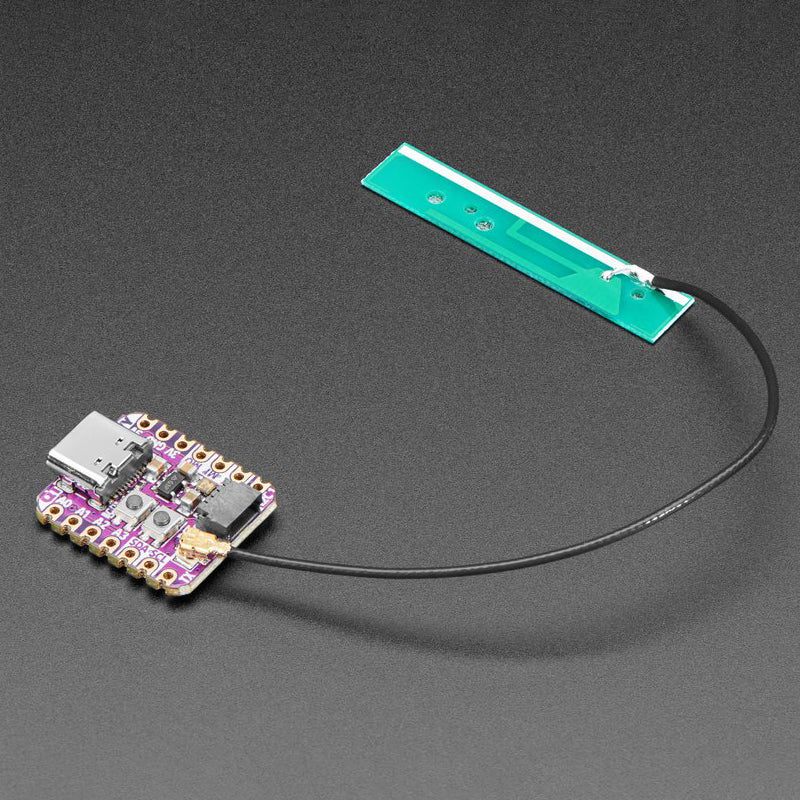
Adafruit QT Py ESP32-S2 WiFi Dev Board with uFL Antenna Port
This diminutive dev board comes with one of our new favorite lil chips, the ESP32-S2, and a uFL antenna port so you can connect any WiFi antenna for great range!
Note: This board does not come with an onboard antenna, you need a uFL connector antenna such as the 2.4GHz Mini Flexible WiFi Antenna or a uFL to RP-SMA adapter. The antenna is not included in purchase. Almost all WiFi antennas are RP-SMA so watch out that you don't use a uFL to SMA adapter.
The ESP32-S2 is a highly-integrated, low-power, 2.4 GHz Wi-Fi System-on-Chip (SoC) solution that now has built-in native USB as well as some other interesting new technologies like Time of Flight distance measurements. With its state-of-the-art power and RF performance, this SoC is an ideal choice for a wide variety of application scenarios relating to the Internet of Things (IoT), wearable electronics, and smart homes.
Please note: the QT Py ESP32-S2 has a single-core 240 MHz chip, so it won't be as fast as ESP32's with dual-core. Also, there is no Bluetooth support. However, we are super excited about the ESP32-S2's native USB which unlocks a lot of capabilities for advanced interfacing! This ESP32-S2 mini-module used on the QT Py comes with 4 MB flash and 2 MB PSRAM so you can buffer massive JSON files for parsing!
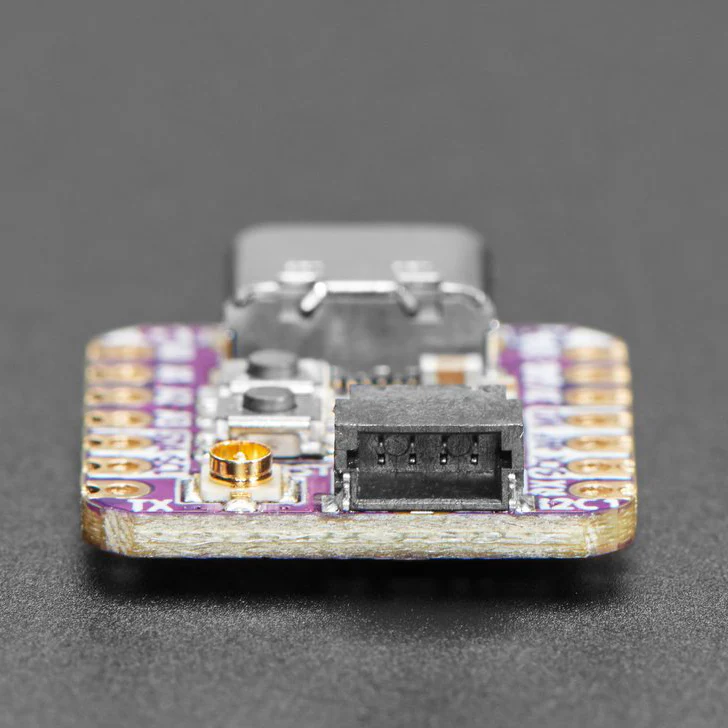
OLEDs! Inertial Measurement Units! Sensors a-plenty. All plug-and-play thanks to the innovative chainable design: SparkFun Qwiic-compatible STEMMA QT connectors for the I2C bus so you don't even need to solder! Just plug in a compatible cable and attach it to your MCU of choice, and you’re ready to load up some software and measure some light.
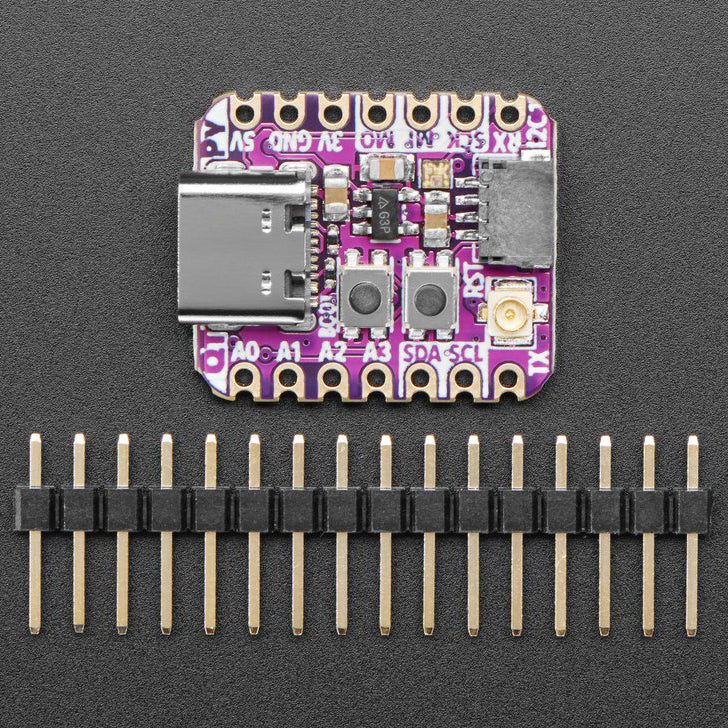
Pinout and shape are Seeed Xiao compatible, with castellated pads so you can solder it flat to a PCB. In addition to the QT connector, Adafruit also added an RGB NeoPixel (with controllable power pin to allow for ultra-low-power usage), a reset button (great for restarting your program or entering the bootloader), and a button on GPIO 0 for entering the ROM bootloader or for user input
Runs Arduino like a dream and CircuitPython projects are fantastically fun.
- Same size, form-factor, and pin-out as Seeed Xiao
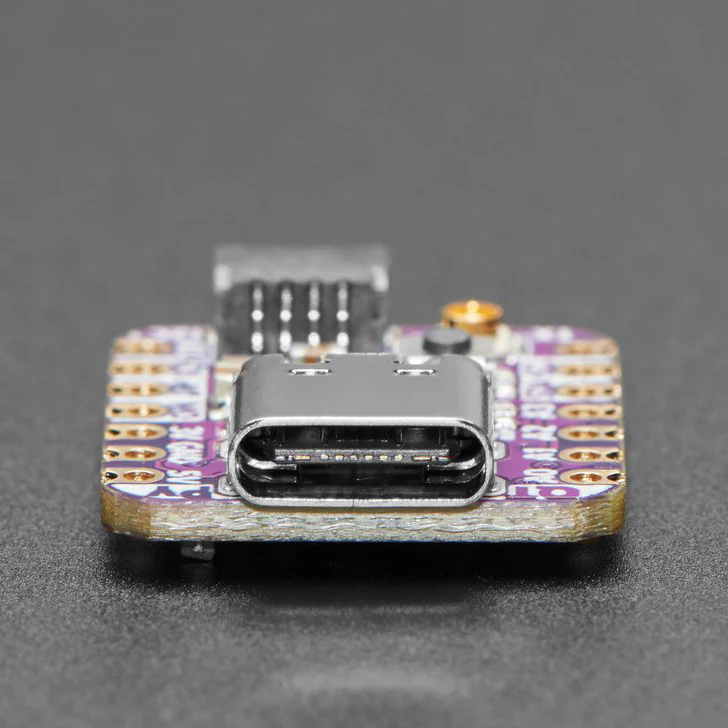
- USB Type C connector
- ESP32-S2 240MHz Tensilica processor - the next generation of ESP32, now with native USB so it can act like a keyboard/mouse, MIDI device, disk drive, etc!
- 4 MB Flash & 2 MB PSRAM
- Native USB supported by every OS - can be used in Arduino or CircuitPython as USB serial console, MIDI, Keyboard/Mouse HID, even a little disk drive for storing Python scripts.
- Can be used with Arduino IDE or CircuitPython
- Built-in RGB NeoPixel LED with power control to reduce quiescent power in deep sleep
- Battery input pads on underside with diode protection for external battery packs up to 6V input
- 13 GPIO pins:
- 11 on breakout pads, 2 more on QT connector
- 10 x 12-bit analog inputs (SPI high speed pads do not have analog inputs)
- 8-bit analog output DAC
- PWM outputs on any pin
- Two I2C ports, one on the breakout pads, and another with STEMMA QT plug-n-play connector
- Hardware UART
- Hardware SPI on the high speed SPI peripheral puns
- Hardware I2S on any pins
- 5 x Capacitive Touch with no additional components required
- 3.3V regulator with 600mA peak output
- Reset switch for starting your project code over, boot 0 button for entering bootloader mode
- Really really small
- Light sleep at 4mA, deep sleep at ~70uA
Technical Details
Revision History:
- As of June 24, 2022 - This board may come with a different regulator than AP2112K due to parts shortages. The regulator can provide at least 500mA.
- Before March 18, 2022 - Please note there is a hardware bug in the current revision of the PCB that causes deep sleep to draw ~6mA,
- As of March 18th, 2022, we've fixed low power sleep mode, so deep sleep can get down to 70uA
Product Dimensions: 21.8mm x 17.9mm x 5.7mm / 0.9" x 0.7" x 0.2"
Product Weight: 2.1g / 0.1oz
More Images
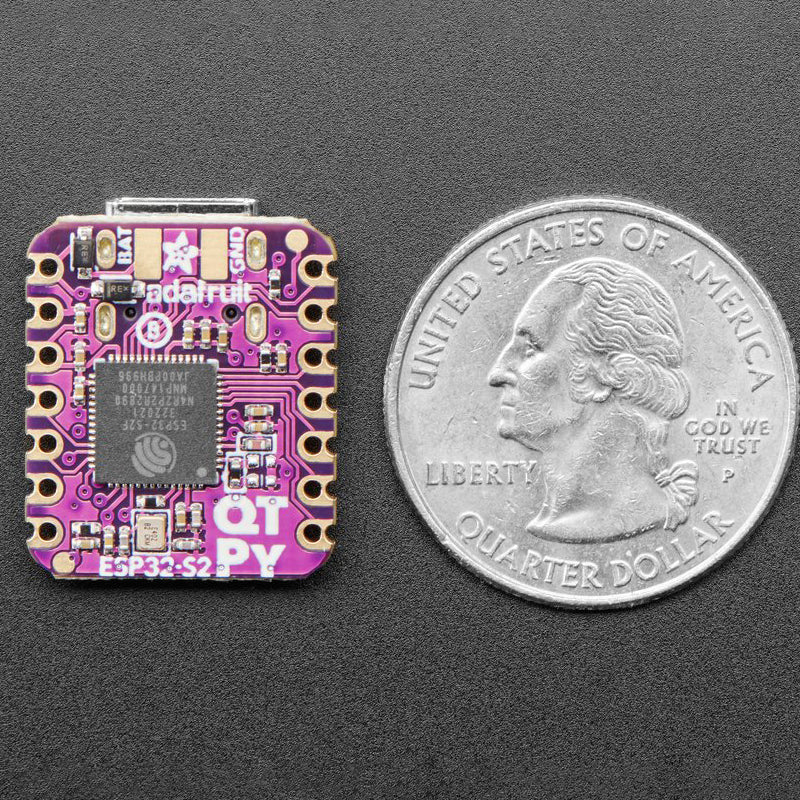
Adafruit QT Py ESP32-S2 WiFi Dev Board with uFL Antenna Port
This diminutive dev board comes with one of our new favorite lil chips, the ESP32-S2, and a uFL antenna port so you can connect any WiFi antenna for great range!
Note: This board does not come with an onboard antenna, you need a uFL connector antenna such as the 2.4GHz Mini Flexible WiFi Antenna or a uFL to RP-SMA adapter. The antenna is not included in purchase. Almost all WiFi antennas are RP-SMA so watch out that you don't use a uFL to SMA adapter.
The ESP32-S2 is a highly-integrated, low-power, 2.4 GHz Wi-Fi System-on-Chip (SoC) solution that now has built-in native USB as well as some other interesting new technologies like Time of Flight distance measurements. With its state-of-the-art power and RF performance, this SoC is an ideal choice for a wide variety of application scenarios relating to the Internet of Things (IoT), wearable electronics, and smart homes.
Please note: the QT Py ESP32-S2 has a single-core 240 MHz chip, so it won't be as fast as ESP32's with dual-core. Also, there is no Bluetooth support. However, we are super excited about the ESP32-S2's native USB which unlocks a lot of capabilities for advanced interfacing! This ESP32-S2 mini-module used on the QT Py comes with 4 MB flash and 2 MB PSRAM so you can buffer massive JSON files for parsing!
OLEDs! Inertial Measurement Units! Sensors a-plenty. All plug-and-play thanks to the innovative chainable design: SparkFun Qwiic-compatible STEMMA QT connectors for the I2C bus so you don't even need to solder! Just plug in a compatible cable and attach it to your MCU of choice, and you’re ready to load up some software and measure some light.
Pinout and shape are Seeed Xiao compatible, with castellated pads so you can solder it flat to a PCB. In addition to the QT connector, Adafruit also added an RGB NeoPixel (with controllable power pin to allow for ultra-low-power usage), a reset button (great for restarting your program or entering the bootloader), and a button on GPIO 0 for entering the ROM bootloader or for user input
Runs Arduino like a dream and CircuitPython projects are fantastically fun.
- Same size, form-factor, and pin-out as Seeed Xiao
- USB Type C connector
- ESP32-S2 240MHz Tensilica processor - the next generation of ESP32, now with native USB so it can act like a keyboard/mouse, MIDI device, disk drive, etc!
- 4 MB Flash & 2 MB PSRAM
- Native USB supported by every OS - can be used in Arduino or CircuitPython as USB serial console, MIDI, Keyboard/Mouse HID, even a little disk drive for storing Python scripts.
- Can be used with Arduino IDE or CircuitPython
- Built-in RGB NeoPixel LED with power control to reduce quiescent power in deep sleep
- Battery input pads on underside with diode protection for external battery packs up to 6V input
- 13 GPIO pins:
- 11 on breakout pads, 2 more on QT connector
- 10 x 12-bit analog inputs (SPI high speed pads do not have analog inputs)
- 8-bit analog output DAC
- PWM outputs on any pin
- Two I2C ports, one on the breakout pads, and another with STEMMA QT plug-n-play connector
- Hardware UART
- Hardware SPI on the high speed SPI peripheral puns
- Hardware I2S on any pins
- 5 x Capacitive Touch with no additional components required
- 3.3V regulator with 600mA peak output
- Reset switch for starting your project code over, boot 0 button for entering bootloader mode
- Really really small
- Light sleep at 4mA, deep sleep at ~70uA
Technical Details
Revision History:
- As of June 24, 2022 - This board may come with a different regulator than AP2112K due to parts shortages. The regulator can provide at least 500mA.
- Before March 18, 2022 - Please note there is a hardware bug in the current revision of the PCB that causes deep sleep to draw ~6mA,
- As of March 18th, 2022, we've fixed low power sleep mode, so deep sleep can get down to 70uA
Product Dimensions: 21.8mm x 17.9mm x 5.7mm / 0.9" x 0.7" x 0.2"
Product Weight: 2.1g / 0.1oz
Product Information
Product Information
Shipping & Returns
Shipping & Returns
Description
This diminutive dev board comes with one of our new favorite lil chips, the ESP32-S2, and a uFL antenna port so you can connect any WiFi antenna for great range!
Note: This board does not come with an onboard antenna, you need a uFL connector antenna such as the 2.4GHz Mini Flexible WiFi Antenna or a uFL to RP-SMA adapter. The antenna is not included in purchase. Almost all WiFi antennas are RP-SMA so watch out that you don't use a uFL to SMA adapter.
The ESP32-S2 is a highly-integrated, low-power, 2.4 GHz Wi-Fi System-on-Chip (SoC) solution that now has built-in native USB as well as some other interesting new technologies like Time of Flight distance measurements. With its state-of-the-art power and RF performance, this SoC is an ideal choice for a wide variety of application scenarios relating to the Internet of Things (IoT), wearable electronics, and smart homes.
Please note: the QT Py ESP32-S2 has a single-core 240 MHz chip, so it won't be as fast as ESP32's with dual-core. Also, there is no Bluetooth support. However, we are super excited about the ESP32-S2's native USB which unlocks a lot of capabilities for advanced interfacing! This ESP32-S2 mini-module used on the QT Py comes with 4 MB flash and 2 MB PSRAM so you can buffer massive JSON files for parsing!
OLEDs! Inertial Measurement Units! Sensors a-plenty. All plug-and-play thanks to the innovative chainable design: SparkFun Qwiic-compatible STEMMA QT connectors for the I2C bus so you don't even need to solder! Just plug in a compatible cable and attach it to your MCU of choice, and you’re ready to load up some software and measure some light.
Pinout and shape are Seeed Xiao compatible, with castellated pads so you can solder it flat to a PCB. In addition to the QT connector, Adafruit also added an RGB NeoPixel (with controllable power pin to allow for ultra-low-power usage), a reset button (great for restarting your program or entering the bootloader), and a button on GPIO 0 for entering the ROM bootloader or for user input
Runs Arduino like a dream and CircuitPython projects are fantastically fun.
- Same size, form-factor, and pin-out as Seeed Xiao
- USB Type C connector
- ESP32-S2 240MHz Tensilica processor - the next generation of ESP32, now with native USB so it can act like a keyboard/mouse, MIDI device, disk drive, etc!
- 4 MB Flash & 2 MB PSRAM
- Native USB supported by every OS - can be used in Arduino or CircuitPython as USB serial console, MIDI, Keyboard/Mouse HID, even a little disk drive for storing Python scripts.
- Can be used with Arduino IDE or CircuitPython
- Built-in RGB NeoPixel LED with power control to reduce quiescent power in deep sleep
- Battery input pads on underside with diode protection for external battery packs up to 6V input
- 13 GPIO pins:
- 11 on breakout pads, 2 more on QT connector
- 10 x 12-bit analog inputs (SPI high speed pads do not have analog inputs)
- 8-bit analog output DAC
- PWM outputs on any pin
- Two I2C ports, one on the breakout pads, and another with STEMMA QT plug-n-play connector
- Hardware UART
- Hardware SPI on the high speed SPI peripheral puns
- Hardware I2S on any pins
- 5 x Capacitive Touch with no additional components required
- 3.3V regulator with 600mA peak output
- Reset switch for starting your project code over, boot 0 button for entering bootloader mode
- Really really small
- Light sleep at 4mA, deep sleep at ~70uA
Technical Details
Revision History:
- As of June 24, 2022 - This board may come with a different regulator than AP2112K due to parts shortages. The regulator can provide at least 500mA.
- Before March 18, 2022 - Please note there is a hardware bug in the current revision of the PCB that causes deep sleep to draw ~6mA,
- As of March 18th, 2022, we've fixed low power sleep mode, so deep sleep can get down to 70uA
Product Dimensions: 21.8mm x 17.9mm x 5.7mm / 0.9" x 0.7" x 0.2"
Product Weight: 2.1g / 0.1oz